
Lake Minnetonka dock rules depend on shoreline rights, the property's authorized Dock Use Area and both LMCD and Minnesota DNR requirements, not simply the dock a seller has installed.
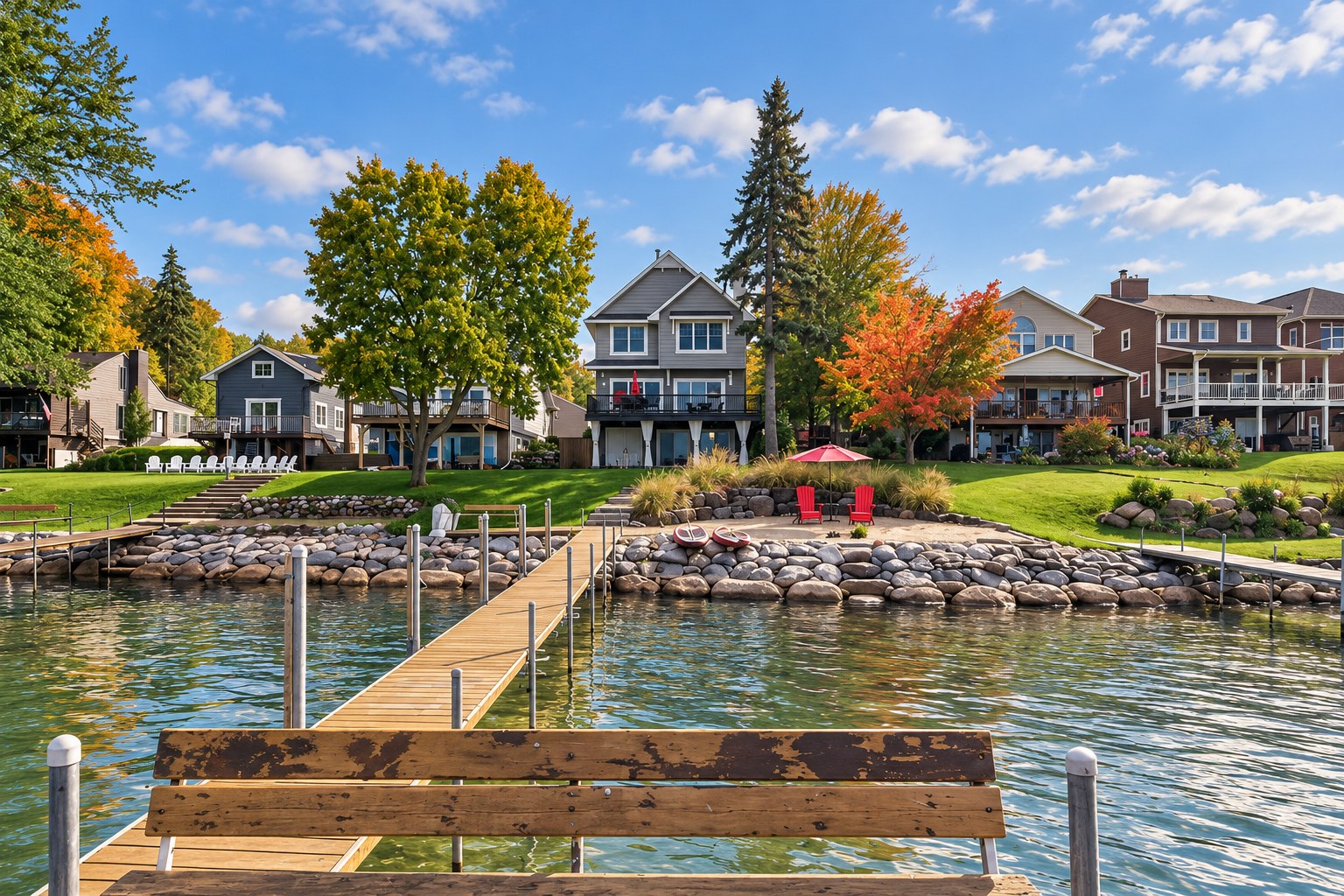
Lake Minnetonka dock rules
Lake Minnetonka dock rules apply to the placement and configuration of docks, lifts and related structures within an authorized Dock Use Area. The Lake Minnetonka Conservation District homeowner guidance describes extended side-property lines and applicable setbacks. The usable dock area is not simply an extension of how wide the lawn looks at the water.
For a purchase, separate three questions: what shoreline rights transfer, what configuration is authorized, and whether that configuration works for the intended boat. A seller's existing dock is evidence to investigate, not proof that a larger layout will be allowed. Request surveys, approval records and any shared-use documents while the purchase agreement still allows unresolved issues to be addressed.
Riparian rights in Minnesota
Riparian rights in Minnesota concern rights associated with waterfront ownership, but the specific parcel, recorded documents and applicable regulations determine what a buyer can actually use. The LMCD residential dock handout starts with establishing ownership of, or rights to, the shoreline. A view, nearby water or a dock shown in listing photos does not establish those rights.
LMCD uses the 929.4-foot ordinary high-water reference in its dock guidance; the visible waterline changes with lake level and is not a substitute for that reference. A survey may be needed to establish side-property lines and their extensions. Have a title professional or attorney review deeded or shared access documents, including maintenance and use restrictions, rather than translating a marketing phrase into a legal right.
Lake Minnetonka docks
Lake Minnetonka docks must satisfy both the site's local rules and any applicable state permit conditions. LMCD's homeowner guidance allows docks, decks and platforms to exceed eight feet in one dimension, but not both. That local description is not interchangeable with the DNR's conditions for a dock that needs no individual state permit.
The Minnesota DNR dock guidance generally allows a qualifying dock without an individual DNR permit when no part exceeds eight feet in width and its other conditions are met. Qualifying platforms may instead fall under General Permit 2008-0401: up to 120 square feet excluding the walkway or 170 including it, with a walkway no wider than five feet and additional conditions. Confirm both layers before ordering equipment.
| Check | What to establish | Who to ask |
|---|---|---|
| Title and access | Ownership, easement or shared-use rights | Title professional or attorney |
| Local dock placement | Dock Use Area, setbacks and approvals | LMCD |
| State water rules | Exemption or permit eligibility | Minnesota DNR |
| Shoreland work | City approvals for land-side changes | Property's municipality |
Lake Minnetonka dock rules before buying
Lake Minnetonka dock rules should be checked before buying whenever the planned boat or dock layout is essential to the purchase. Keep the authorized layout, survey, title review and real-world boat fit in one decision. A legal dock can still be unsuitable for a particular boat because of site-specific depth, access or maneuvering conditions; a bay name alone does not settle those details.
For equipment moved from another lake, the DNR aquatic invasive species guidance requires docks, lifts and related equipment to remain out of the water and dry for 21 days before entering a different water body. For installation help, the preferred vendor directory includes Niccum Docks. Compare these property-level checks with the lakefront buyer and seller guide; contractor advice does not replace approval or title review.