
Lakefront living on Lake Minnetonka means the lake is part of daily life at home: your own shoreline and dock, with boating, swimming, and fishing right from your yard.
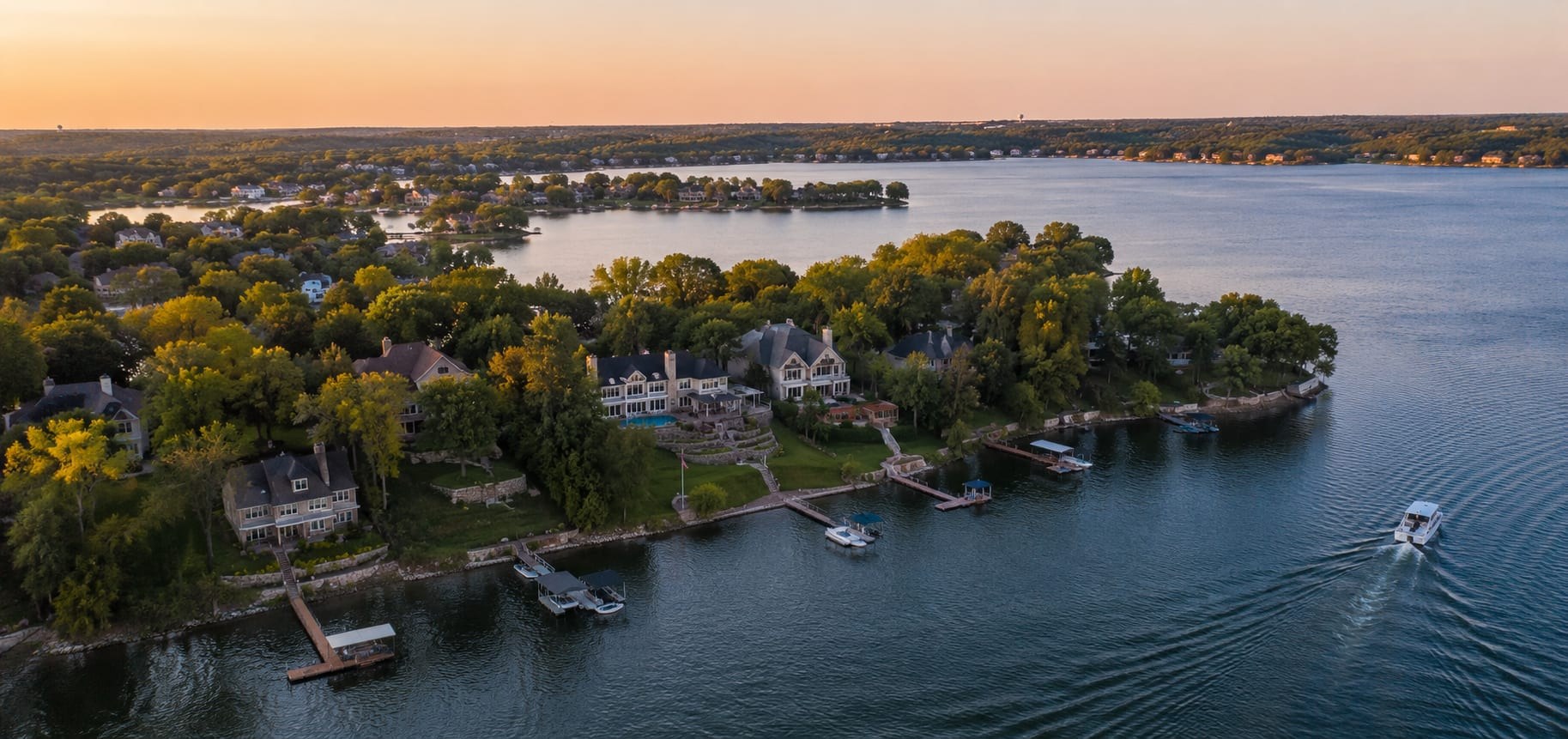
How do you evaluate a lakefront home?
A lakefront home is evaluated as one property: shoreline, water depth, dock setup, bay and home layout together determine how it works. A renovated kitchen cannot change a steep route to the water or an unsuitable boating channel. The shore and house need to support the same daily activities.
At the dock, consider depth for the intended boat and the condition of the shoreline for swimming and upkeep. Walk back toward the house to understand the slope, stairs and usable yard. Then consider which rooms face the lake and how they open to outdoor space. A level connection and a long stair create different routines even when the views look similar.
Does the bay matter?
Yes, the bay matters because orientation, wind exposure, boating routes and nearby traffic change the everyday waterfront experience. Lake Minnetonka includes smaller markets such as Wayzata Bay, Crystal Bay, Browns Bay, Smithtown Bay, Lafayette Bay, Maxwell Bay, Spring Park Bay, Cooks Bay and Halstead Bay. Homes a short boat ride apart can receive different sun and wind.
The Black Lake setting illustrates why a smaller-water location needs its own review. A bay label alone cannot establish conditions at the shore. Compare the property's orientation, route through channels and actual dock setup rather than assuming one part of the lake has a fixed advantage.
| Factor | Bay setting | Main lake setting | What to check |
|---|---|---|---|
| Water conditions | Set by the bay's orientation and how exposed it is to wind | Set by orientation and wind exposure across more open water | Sun and wind at the shoreline at different times of day |
| Views | Shaped by the bay's shape and the shoreline across the water | Shaped by the open water in front of the home | The view from the main rooms, not only the dock |
| Boat traffic | Depends on nearby boating routes, channels and slow/no-wake areas | Depends on nearby boating routes and busy-water patterns | Traffic on a summer weekend from the property itself |
| Typical price position | Set by the specific shoreline, water depth, dock and home | Set by the specific shoreline, water depth, dock and home | Recent sales of similar homes on comparable water |
What is lakefront living like year-round?
Lakefront living continues through every season, with summer boating, fishing and paddleboarding giving way to winter activities and ongoing home maintenance. Waterfront restaurants, shops and parks add to daily life beyond the dock. The home still needs to work when peak boating season ends and outdoor routines change.
Storage for boat supplies, dock sections and lake gear belongs in the year-round review, along with the winter route to the shore. Stairs, outdoor spaces and seasonal shoreline upkeep can affect how manageable ownership feels. The Lake Minnetonka versus cabin comparison helps distinguish a waterfront home used daily from a destination property that also requires travel and remote upkeep.
What should lakefront buyers watch for?
Lakefront buyers should watch most closely for property features that are difficult to change, especially the shoreline, water depth and route between the house and lake. Cosmetic updates can come later, but an unsuitable dock setup or steep lot will continue to shape daily use. New construction does not remove the need to evaluate the land and water.
Condition and floor plan still matter alongside those outside features. Compare realistic alternatives before treating a water view as enough reason to accept a poor fit. Orientation, sun, wind and boating routes can distinguish otherwise similar homes. An offer decision should reflect the whole property and its future resale, not just appealing interior finishes.
What should lakefront sellers highlight?
Lakefront sellers should highlight the usable shoreline, dock setup, views and connection between the house and water alongside the home's condition and layout. Buyers compare that complete property, not just its amount of living space. Two similar-sized homes can differ because of water access, lot usability and the experience at the shore.
A waterfront value review can help identify which projects matter before preparation begins. Show the route to the dock, water depth and how the yard supports lake activities rather than relying on interior photographs alone. Keep selling costs and commission examples in the transaction budget, separate from the comparison of shoreline, condition and competing homes.