
Buying a Lake Minnetonka lakefront home means choosing the right bay, shoreline, school district, sun exposure and dock setup as much as the house, because small differences around the lake change price, lifestyle and resale.
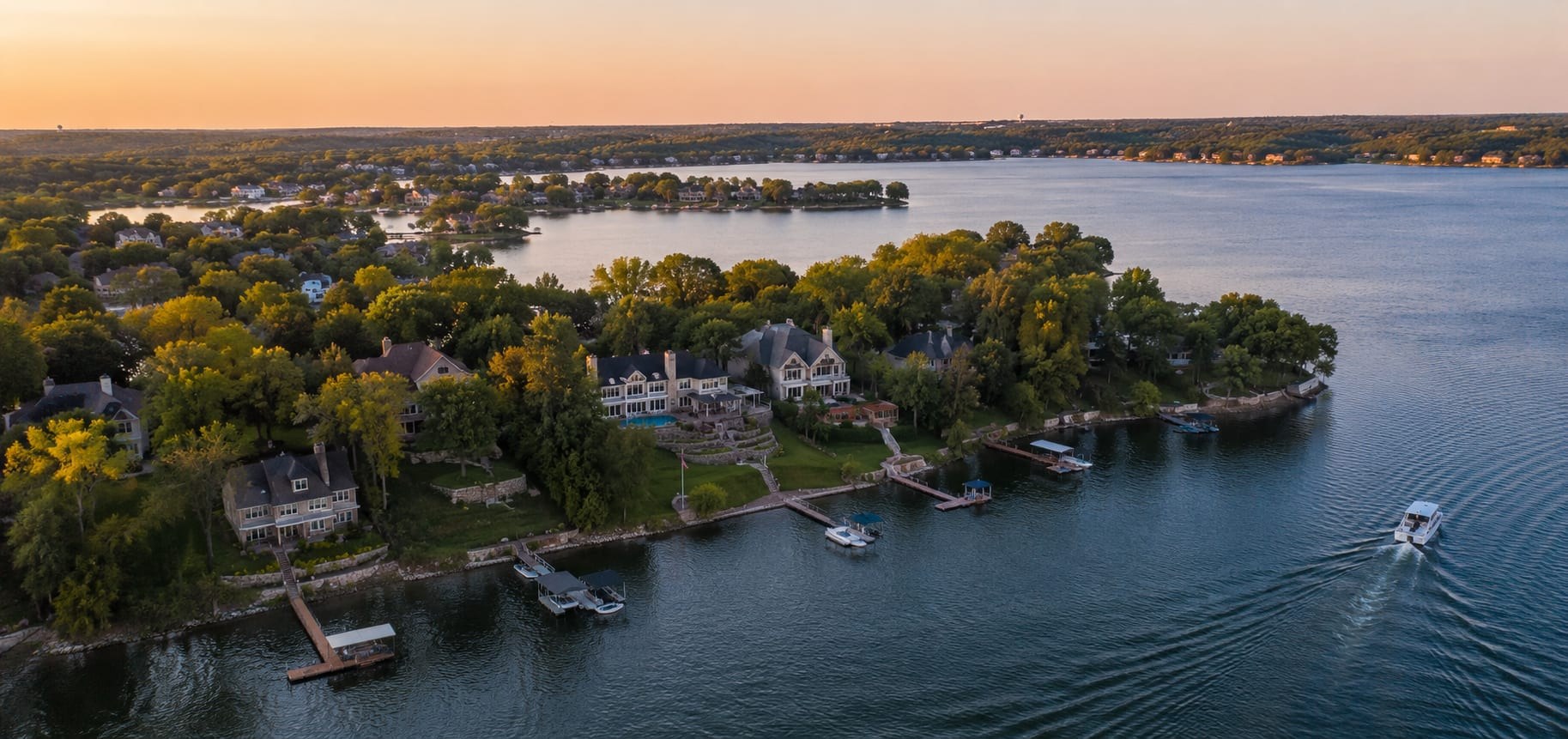
Why is Lake Minnetonka really several lake markets?
Lake Minnetonka behaves like a group of smaller lake markets rather than one. Wayzata Bay, Crystal Bay, Browns Bay, Smithtown Bay, Lafayette Bay, Maxwell Bay, Spring Park Bay, Cooks Bay and Halstead Bay can all feel different.
The strongest purchases balance shoreline quality, water depth, dock usability, views, privacy, road noise, school district and the condition of the home. A beautiful interior can be changed over time; a narrow channel, steep grade, poor swimming bottom, limited dock setup or difficult shoreline is much harder to fix. School boundaries need verification by exact address, especially around Orono, Minnetrista, Shorewood, Deephaven, Mound and Minnetonka, where Orono, Minnetonka, Westonka, Wayzata and other district lines can shift by pocket.
Should you buy on the east or west side of Lake Minnetonka?
The east side usually carries the strongest convenience premium, while the west side often offers more variety for the money. Which is better depends on whether you value commute and town centers or land, privacy and house-to-price ratio.
| Side | Typical communities | What buyers like | Usual tradeoff |
|---|---|---|---|
| East and southeast | Wayzata, Deephaven, Woodland, Excelsior, Tonka Bay | Shorter Minneapolis commute, walkable pockets, established estates | Less land, an older home or a smaller shoreline at the same budget |
| West | Orono, Minnetrista, Mound, Spring Park, parts of Shorewood | More privacy, lot size and relaxed lake pockets | Softer shoreline, channel influence or longer drives in some areas |
On the west side, a school district and resale profile need to be understood before writing an offer. The lakefront living guide covers daily life on the water.
Why can shoreline matter more than the house?
Shoreline matters because it controls swimming, boating, dock use, maintenance, winter ice movement, erosion and resale, and it is the hardest part of a lake property to change. On Lake Minnetonka it is not a scenery detail.
Hard sand with a gradual entry is usually the most desirable for swimming and everyday use, and it is easier for kids and guests. Soft bottom, weeds or shallow water do not make a property a bad buy, but they change the buyer pool: some buyers only care about boating and views, while others discount a home if swimming is limited. A steep grade affects daily use for buyers thinking about aging, kids, pets or carrying lake gear. Flat, usable lakeshore makes the lake feel like part of the yard.
What does each Lake Minnetonka price level usually buy?
Across Lake Minnetonka lakefront homes for sale, each price milestone usually buys a different balance of house and water. Around $1 million, buyers see entry-level lakefront or channel opportunities with compromises such as smaller or older homes, tighter lots, softer shoreline or a less premium bay; the under $1 million guide looks at that range.
Around $1.5 million brings more true lakefront but still heavy tradeoffs, often a better house or better water but not both. Around $2 million is a stronger balance point, with better usability, shoreline and updates. Around $3 million, high-quality lakefront becomes realistic, with stronger views and fewer compromises. Around $4 million is premium lakefront with better bays and more complete dock setups, and $5 million and above pays for a rare combination of location, shoreline, architecture and privacy.
What should you look at during a lakefront showing?
Look at the water as closely as the house. Walk the route from the house to the dock, stand at the shoreline and look both directions, and ask how deep the water is at the dock.
Notice weeds, muck, riprap, erosion, steep steps, lift placement, neighboring docks, boat traffic, privacy from the water and how sun hits the outdoor spaces. Big-water views can support value but bring more wind, boat traffic and wave action; quiet bays suit paddleboarding and calmer dock time; channels can lower the entry point but need a close look at depth, navigation and boat size. Inside, check lake-facing rooms, main-level living, storage for lake gear and how the home works in winter. Check dock, shoreline and remodeling plans against city, watershed and lake rules before the purchase feels final.